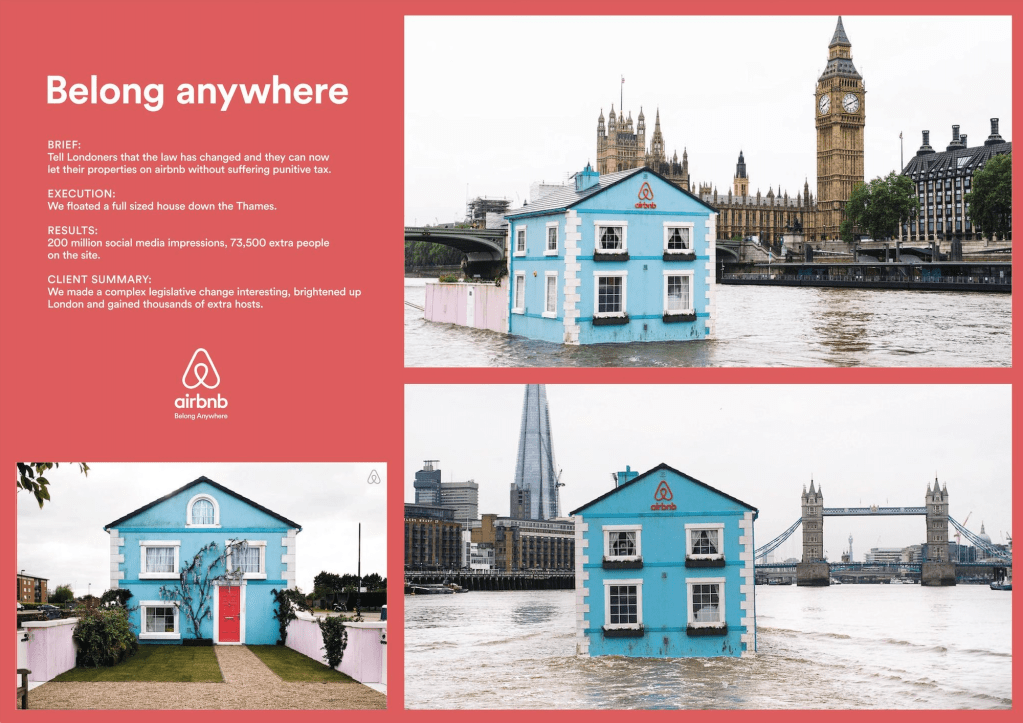
It’s a cloudy evening and you’re strolling along the Thames, enjoying the city’s iconic skyline, and suddenly, you see it – a house floating serenely down the river. Not a boat, not a raft, but a fully livable, cozy house complete with a garden and doghouse. You’d stop in your tracks, right? I’m sure I would. And that’s exactly what Airbnb bet on when they launched their Floating House campaign, a prime example of disruptive marketing that didn’t just turn heads, but redefined what a travel experience could be.
While the Floating House campaign may seem like a relic of the past, it remains incredibly relevant in today’s marketing landscape. In an age where consumers are bombarded with endless advertisements, it’s campaigns like these that stand out, not just because they were bold, but because they understood how to leverage an unforgettable, tangible experience that continues to resonate. Take a look!
How Disruptive Marketing Techniques Enhance Brand Visibility
Disruptive marketing thrives on breaking the norm. It works because:
- It’s Unexpected: Floating a house down the Thames wasn’t just unusual; it was brilliantly bizarre. This unexpectedness made it impossible to ignore.
- It’s Shareable: In today’s social media landscape, a quirky, photo-worthy campaign like this practically markets itself.
- It’s Experiential: By making the house livable and offering stays, Airbnb turned a PR stunt into a tangible experience.
For Airbnb, the campaign was about more than just visibility; it was about embodying their brand ethos. They weren’t just advertising accommodations; they were selling the idea that travel is about extraordinary, unforgettable experiences.
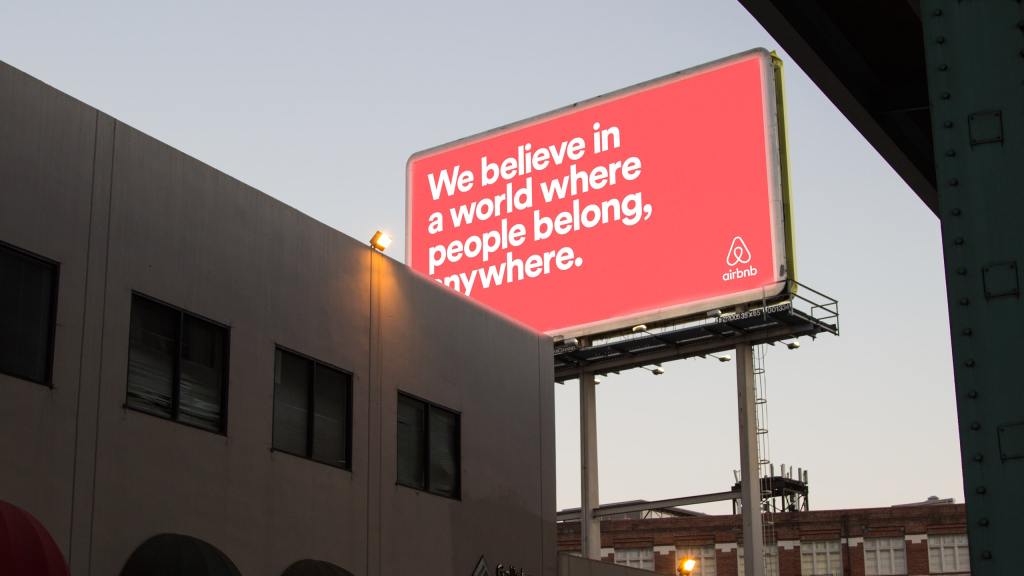
How Airbnb’s Floating House Captured Attention
The Floating House campaign exemplifies how experiential marketing with a disruptive element can captivate audiences. Let’s unpack why it worked.
- Alignment with Brand Values: Airbnb promised unique, once-in-a-lifetime travel experiences, and the Floating House campaign delivered this promise in a way no one could have expected. It directly aligned with Airbnb’s ethos of offering distinctive, memorable stays rather than just standard accommodations.
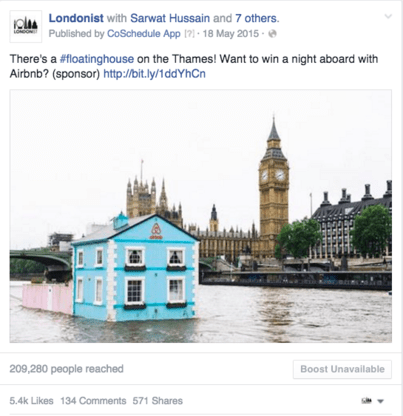
- Media & Consumer Buzz: From TV coverage to viral tweets, the floating house generated wide-reaching attention. It was featured in top news outlets like The Guardian, BBC News, and Time, and the quirky, visual nature of the campaign made it a viral sensation on social media. The striking, unusual concept of a house on the Thames created immediate buzz, propelling the campaign beyond just an ad into a cultural conversation.
- Memorability: Years later, people are still talking about this campaign. It’s cited in numerous marketing discussions as an example of disruptive and experiential marketing. A quick online search shows the campaign’s continued influence, with people referencing it in articles and posts about marketing innovation and creative advertising. This ongoing conversation highlights the campaign’s lasting impact, far outlasting many other similarly disruptive attempts.
This campaign didn’t just sell Airbnb as a service; it told a story that stuck with people. It’s the kind of marketing I admire – creative, bold, and impactful. But I can’t help but wonder: is the buzz worth it if the brand fails to capitalize on the momentum? For Airbnb, the answer seems to be yes, but for other brands, it might not be so clear cut.
An example of when the buzz backfired is Pepsi’s Kendall Jenner Ad in 2017. The campaign, intended as a bold statement of unity and peace, instead trivialized social justice movements by depicting a supermodel resolving a protest with a can of soda. While the ad garnered global attention, it sparked outrage rather than connection, forcing Pepsi and Jenner to issue an apology and pull the campaign within days. Unlike the Floating House, which was seamlessly aligned with its promise of unique travel experiences, Pepsi’s campaign suffered from a lack of authenticity and cultural sensitivity. The buzz generated didn’t reinforce the brand’s values. Instead, it contradicted them, leaving a lasting dent in its reputation.
Not sure what I’m referencing? Watch the video here:
In summary, this raises a crucial point for brands; disruption can drive visibility, but without authenticity, thoughtful execution, and alignment with audience values, the momentum can fizzle out, or worse, cause long-term damage to a brands reputation.
The Consumer Perspective

What’s the big deal for consumers? Campaigns like Airbnb’s Floating House make brands relatable and engaging by showing (not just telling) what they stand for. Instead of simply advertising what they offer, Airbnb turned their value proposition into an experience, literally floating it down the Thames. This kind of bold, unexpected move not only captures attention but also allows consumers to interact with the brand on a deeper, more personal level.
Modern consumers crave connection and authenticity. They are no longer just passive recipients of marketing messages; they want to engage with brands that feel real and aligned with their values. In a world where consumers are bombarded with thousands of messages daily, brands that cut through the noise often do so by providing a shared experience, something that resonates on an emotional level. Airbnb achieved this by making the Floating House campaign a spectacle and something that people didn’t just watch but felt compelled to share and talk about. The campaign became part of the cultural conversation, reinforcing Airbnb’s brand as innovative, adventurous, and in tune with its audience’s desire for unique experiences. C’mon, imagine how cool it would be to tell someone you stayed inside a floating house!?
By inviting consumers into their story in such a tangible way, Airbnb fostered a sense of community and connection that went beyond just the product or service. It wasn’t simply about booking a place to stay; it was about being part of a larger narrative that celebrated creativity and new possibilities in travel. As a result, Airbnb strengthened customer loyalty, which is especially crucial in a competitive market where consumers have countless options. According to Harvard Business Review, brands that focus on building authentic connections with consumers are more likely to drive long-term loyalty and repeat business. Airbnb’s strategy not only aligned with this principle but took it one step further by offering a memorable, shareable experience that stayed in people’s minds long after the campaign ended.
In an age of increasingly transactional relationships with brands, campaigns like the Floating House remind us that it’s not enough to just sell a product; brands must create experiences that connect, engage, and resonate with their audience.
Final Thoughts
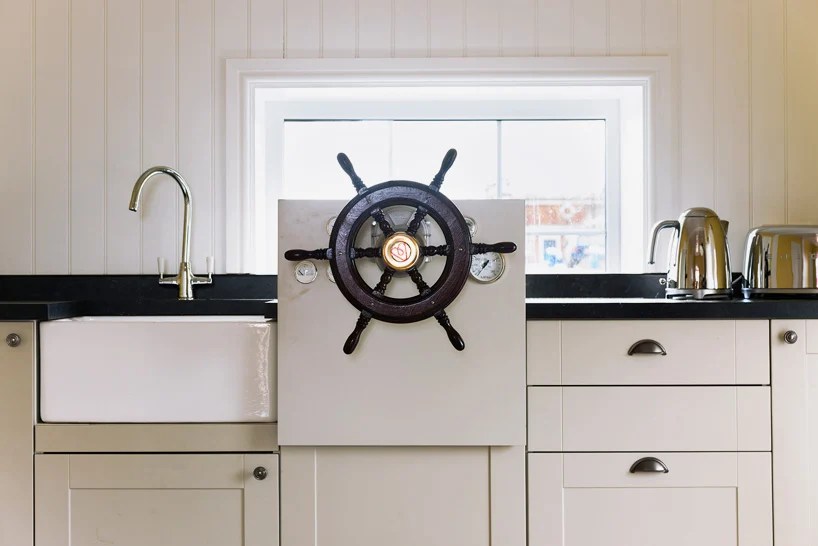
Airbnb’s Floating House campaign is a prime example of using disruptive marketing to create buzz, tell a story, and drive engagement. This campaign is a perfect case of thinking beyond traditional advertising and offering something unexpected that truly resonates with the brand’s core promise: to offer unique, once-in-a-lifetime experiences for travellers. It’s a reminder that sometimes stepping outside of the box isn’t just beneficial, it’s necessary to stand out.
References:
Airbnb float a house on the Thames in London. (2015, May 18). The Guardian. Retrieved November 19, 2024, from https://www.theguardian.com/travel/2015/may/18/airbnb-float-a-house-on-the-thames-in-london
Airbnb-listed Thames houseboat ‘like bonfire waiting for a match’. (2016, March 23). BBC. Retrieved November 19, 2024, from https://www.bbc.com/news/uk-england-london-35871064
Airbnb’s Floating House on the River Thames, review: A solution to London’s housing crisis? | The Independent. (2015, May 21). The Independent. Retrieved November 19, 2024, from https://www.independent.co.uk/travel/hotels/airbnb-s-floating-house-on-the-river-thames-review-a-solution-to-london-s-housing-crisis-10267523.html
Narayandas, D. (n.d.). Building Loyalty in Business Markets. Harvard Business Review. Retrieved November 19, 2024, from https://hbr.org/2005/09/building-loyalty-in-business-markets
Polcari, M. (2023, March 20). How Everything Everywhere Actually Made The Oscars Wholesome – Weird Marketing Tales. Weird Marketing Tales. Retrieved November 17, 2024, from https://weirdmarketingtales.com/how-everything-everywhere-actually-made-the-oscars-wholesome/ TBWA London Advertising Agency. (2015, May 18).
Airbnb’s Fully Functioning Floating House Arrives On The River Thames. LIA Global Sponsor. Retrieved November 19, 2024, from https://lbbonline.com/news/airbnbs-fully-functioning-floating-house-arrives-on-the-river-thames
· · ─ ·☽𖤓☾· ─ · ·
Thank you for reading and I’ll see you next week for another dose of advertising alchemy! -Adie
 Adie’s Advertising Alchemy
Leave a comment